Bitcoin and ether have come under renewed pressure as the fallout from a massive security breach involving Coldcard hardware wallets enters its fifth day. The exploit, which resulted in the theft of roughly 114 million dollars in bitcoin, has sent shockwaves through the community by undermining one of the industry’s core tenets: self-custody. While many investors traditionally move their assets off exchanges to avoid centralized risks, analysts note that this specific vulnerability has spooked users into doing the exact opposite, pushing them back toward exchanges in search of perceived stability.
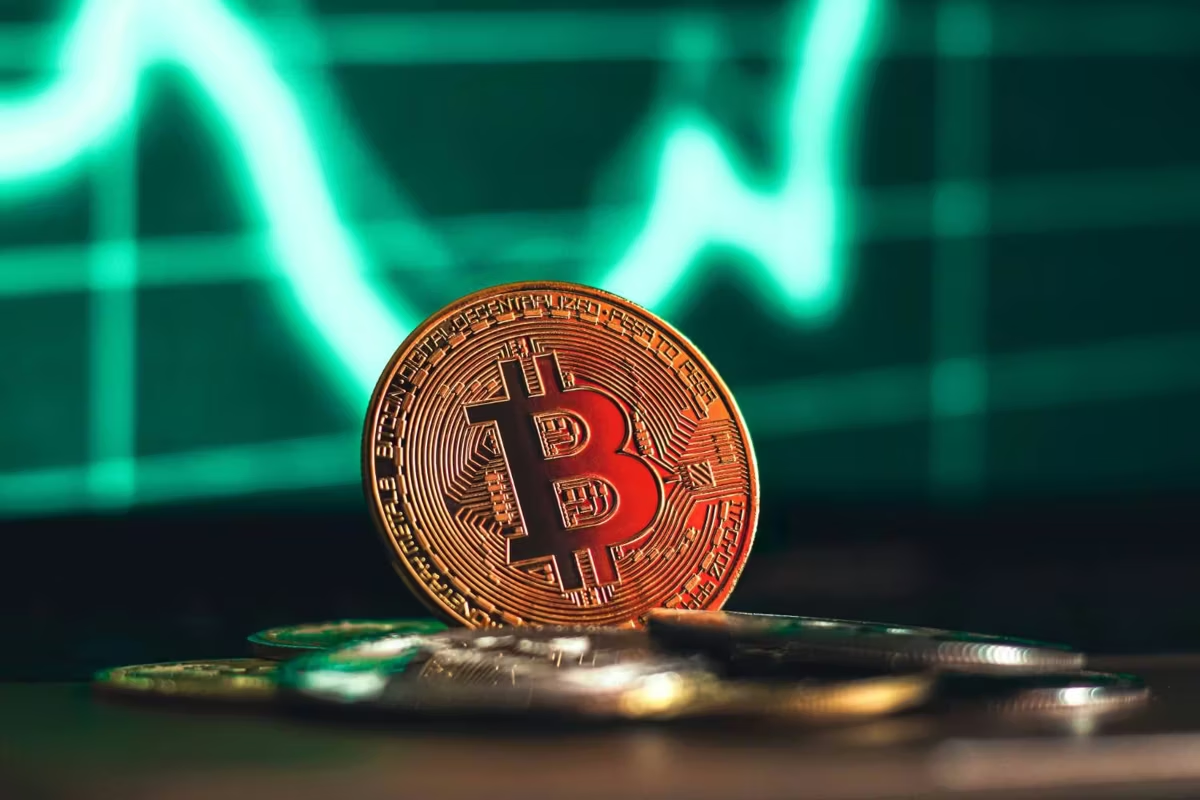
Despite the severity of the hack and the resulting anxiety on social media, the immediate price reaction has been relatively measured. Bitcoin recently dipped about 1.5 percent to trade around 62,595 dollars, while ether saw a decline of nearly 2 percent to sit at 1,842 dollars. Market observers are keeping a close eye on Bitcoin’s 200-week simple moving average, currently positioned just above 63,000 dollars. This technical level has gained importance following hints from MicroStrategy that it may resume purchasing bitcoin after a five-week hiatus once certain price targets are met.
The derivatives market presents a conflicting picture of investor sentiment. Open interest for Bitcoin futures has climbed to a one-month high, suggesting increased activity and speculation. While some traders are placing bullish bets with call options centered around 68,000 and 70,000 dollars, others are leaning bearishly, with over half of futures volume favoring short positions. Interestingly, despite the chaos surrounding Coldcard and shifting geopolitical tensions regarding potential U.S.-Iran talks, the implied volatility index remains steady, indicating that institutional options traders aren’t yet panicking.
Away from the turmoil of hardware security and price dips, some sectors of the ecosystem continue to report growth. NEAR Protocol recently highlighted significant milestones for its Intents system, reporting over 24 billion dollars in lifetime volume. The project also introduced several technical upgrades designed for longevity and scale, including quantum-safe cryptography and AI compute staking. These developments suggest that while infrastructure vulnerabilities can rattle confidence in asset storage, underlying technological expansion within decentralized networks persists independently of market swings.