T-Mobile is doubling down on cutting back free offers just as the carrier begins seeing signs that its efforts to improve customer retention are paying off.
After its postpaid phone churn (the percentage of customers who canceled their service) increased last year following several price hikes, T-Mobile began ramping up its efforts to attract and retain price-conscious customers.
For example, it rolled out several lower-priced phone plans earlier this year, including its “Better Value” phone plan, which starts at $46 per line.
T-Mobile later dropped a free iPhone 17 deal and a “Galaxy S26 Ultra on Us” deal to encourage customers to upgrade their devices.
T-Mobile later touted progress in strengthening customer loyalty in its wireless business, revealing during an earnings call on July 23 that its postpaid phone churn hit 0.85% in the second quarter of this year, down from 0.9% reported for the same period in 2025.
T-Mobile CEO defends dialing back free phone offers
As T-Mobile sees improvement in retention, it is standing firm in its decision to reduce the number of free phone deals/device subsidies it offers customers.
When asked about how this decision will play out during the upcoming holiday season, T-Mobile CEO Srini Gopalan said during the earnings call that the company has given consumers 250 reasons to switch to its network, extending beyond free phone offers.
“Our effort really is to broaden out the reasons why people should choose T-Mobile rather than purely a free phone,” Gopalan said. “Of course, we’ll be competitive on things like subsidy, but that’s not what we’re leaning in on.”
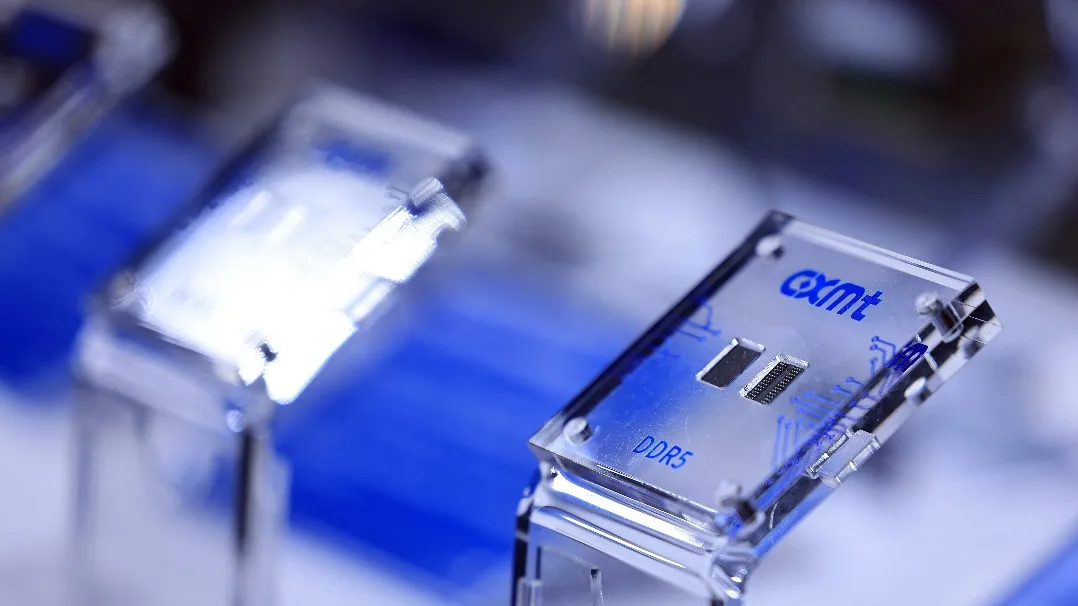
He also acknowledged that smartphone prices are rising as memory prices surge. This is mainly due to rising demand for artificial intelligence infrastructure, component shortages, and shifts in supply.
“What we’re seeing is clearly the memory price increases are resulting in higher prices for smartphones across the board,” Gopalan said. “Our intention, consistent with what we’ve said, is not to increase our subsidy levels. That’s going to mean that customers will have to pay more. That’s just the result of that dynamic.”
Related: T-Mobile customers face new restriction when paying bills
According to research and advisory firm Gartner, prices for memory chips DRAM and SSD are estimated to climb by 130% by the end of 2026. This is expected to result in smartphone prices increasing by 13% this year compared to 2025 levels, likely having a ripple effect on demand.
“This is the steepest contraction in device shipments witnessed in over a decade,” saidRanjit Atwal, a senior director analyst at Gartner, in a press release. “Higher prices will narrow the range of devices available, prompting buyers to hold on to devices for longer, fundamentally altering upgrade cycles.”
T-Mobile Chief Financial Officer Peter Osvaldik clarified during the call that the company isn’t “moving away completely from device subsidies” but is “more rounding off the value proposition.”
“The ability for us to attract customers beyond a subsidy-driven promotional environment, that’s that flow of the current, because customers see the totality of the value that they’re getting inclusive of more and more so the network, the significant reliability, the significant network experience, and (we’re) starting to see a flow of network seekers coming our way,” said Osvaldik.
T-Mobile is responding to shifting customer behavior
The comments from Gopalan and Osvaldik come after the company first warned earlier this year about its plan to cut back on free phone offers.
“(We) can’t make iPhones any freer than they are today,” said Mike Katz, then-chief business and product officer at T-Mobile, during an earnings call in February. “And the truth is, customers’ phone purchase is a point in time, you know, happens once every couple three years.”
“And between those times, they’re living with their wireless service every single day,” he continued. “And we think customers expect and demand more from us than just a free phone deal every three years.”
More T-Mobile News:
- T-Mobile adds new internet plan restriction customers will feel
- T-Mobile drops new free perks for customers as pressure builds
- T-Mobile quietly expands a convenient service for customers
T-Mobile isn’t the only company straying away from offering free phones to customers. Verizon CEO Dan Schulman said during an earnings call in April that the company is pulling back on device subsidies as part of plans to reduce spending on promotional offers to drive more robust revenue growth.
“The era of just the free handset, that’s gone right now,” Schulman said. ‘We are looking at what does the customer need. They have a handset that is last year’s model that’s been refurbished. Do they need a new handset? Many of them, because of the economy, are keeping their handsets longer right now.”
As more wireless carriers reduce their free phone deals, Americans are holding onto their devices for longer periods to save money.
A survey from Reviews.org in September last year found that Americans keep their phones for nearly 2.5 years on average, which is far longer than the annual upgrade cycle. Also, 29% said in the survey that they plan to upgrade their phones in the next 6 to 12 months.
T-Mobile expects a spike in customer losses
Amid T-Mobile’s plan to scale back free phone deals, the carrier expects to see a temporary spike in churn and a slowdown in postpaid account additions in the third quarter of this year.
T-Mobile said this is mainly due to its decision in June to discontinue several older phone plans and push customers on these plans to newer ones that, in some cases, have higher price points.
“As part of our full-year plan and guidance, we anticipated our Q3 (third quarter of 2026) rate plan modernization would result in a temporary elevated account churn profile and expect Q3 net postpaid account additions to be approximately 250,000,” said Osvaldik during the company’s earnings call.
Benchmark analyst Matthew Harrigan said in a recent analyst note obtained by Benzinga that his firm is confident in T-Mobile’s pricing power despite its recent wireless plan changes, noting that over 60% of new customers are enrolling in its premium plans.
“We remain optimistic on pricing power, with average monthly 2Q26 ARPA (average revenue per account) up 2% to $152.91 and ~60% of new account customers opting for the most premium plans with especially high lifetime value,” said Harrigan.
Related: T-Mobile puts new limits on 2 wireless offers for customers